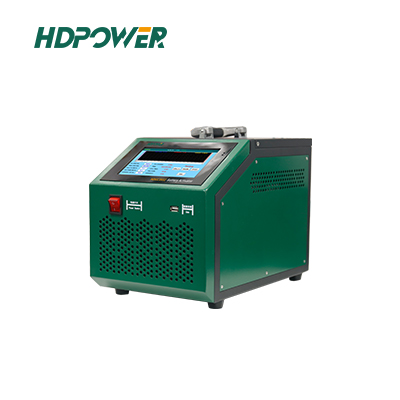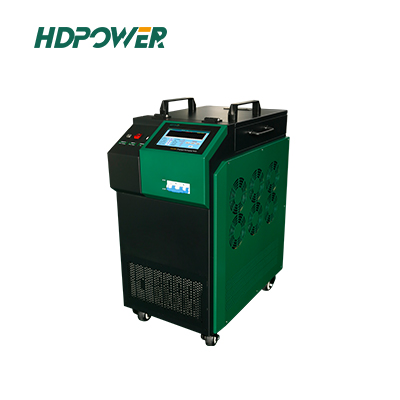
Multi-purpose battery-system activator for constant current discharge, intelligent charging, and activation targeting battery pack maintenance, “backward battery re-life,” and UPS/telecom/power maintenance contexts.
A Battery Activator (often discussed as a “desulfator” in lead‑acid maintenance contexts) is designed to help recover performance loss caused by sulfation, where hardened lead sulfate crystals reduce active plate area and raise internal resistance over time.
For lead‑acid maintenance programs, activation equipment is typically used alongside capacity and charge/discharge testing to restore charging efficiency, verify residual capacity, and support maintenance decisions (repair, reuse, or replace).
In regulated or critical-power environments, documented verification that station batteries can perform as manufactured may be required through performance or modified performance capacity tests of the entire battery bank.
Looking for reliable battery testing and maintenance equipment?
HD Power Test Equipment specializes in the design and manufacturing of professional battery testing solutions, including battery load testers, battery discharge testers, battery chargers, and battery maintenance equipment.
Our products are widely used in power systems, telecommunications, rail transit, data centers, and industrial backup power applications.
Contact our team today to get expert support and the right solution for your battery testing needs.
Use activation cycles to mitigate sulfation-related performance drop and maintain backup runtime with traceable test records.
Support regular battery-system maintenance where telecommunication/base-station applications are explicitly listed for HDGC3985.
For station dc supplies, standards allow verification via capacity testing of the entire battery bank, which aligns with activator-supported charge/discharge maintenance workflows.
Apply controlled discharge/charge/activation workflows to support battery maintenance programs and decision-making.
Sulfation is discussed as common in solar energy storage where batteries are not fully charged regularly; activators are positioned as a modern desulfation approach.
Run activation + residual capacity verification to triage “weak but recoverable” batteries and reduce premature replacement.
Use pack-level activation and controlled discharge/charge modes for routine maintenance at common DC system levels (48–480V).
Deploy activation workflows to address performance loss from prolonged partial-charge or deep-discharge storage conditions described as drivers of sulfation.
HDGC3932 is explicitly described as using high-frequency, low-voltage, high-current characteristics aimed at decomposing lead sulfate crystals and enabling charge/repair behavior for lead-acid batteries.
Both activator platforms list activation and controlled charging/discharging modes (e.g., constant-current, constant-voltage, float-charge), supporting realistic maintenance workflows rather than “single-function” devices.
The line spans 2V/6V/12V single-battery activation (HDGC3932) through 48V/110V/220V/380V/480V battery-system maintenance (HDGC3985), enabling a consistent toolkit as projects scale.
HDGC3985 states rapid remaining capacity analysis via a short rapid discharge window (3–5 minutes) to predict remaining capacity, supporting fast triage decisions in maintenance operations.
Both models list onboard storage and PC/software-style reporting support (e.g., curves, tables, export), which is important for maintenance traceability and audits.
Official parameter tables list over-temperature/over-current protections, alarms, and cutoff behavior; HDGC3985 additionally lists an external open-circuit breaker for emergency stop protection.