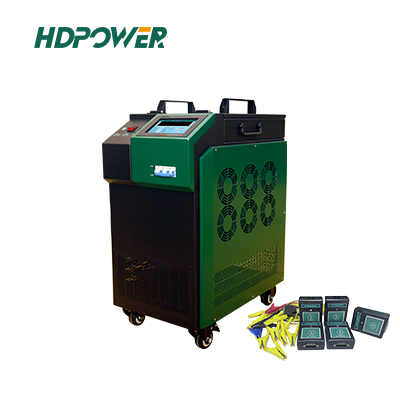
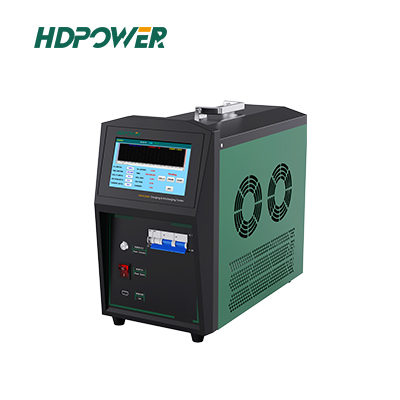
Battery Charge Discharge Tester

Our battery charger discharger series includes advanced models designed for battery pack testing, maintenance, and lifecycle optimization. These systems support constant current discharge, intelligent charging, and cyclic activation, making them suitable for both lithium and lead-acid batteries.

Professional Battery Charger Discharger Manufacturer

Battery charger discharger systems are essential tools for battery maintenance, capacity testing, and lifecycle management across industrial applications. These devices integrate charging, discharging, activation, and capacity analysis functions into a single intelligent platform, enabling precise evaluation and performance optimization of battery packs.

Our battery charger discharger solutions are widely used in UPS systems, telecom base stations, power utilities, rail transit, and EV battery testing. Designed for B2B users such as maintenance teams, system integrators, and battery manufacturers, these testers improve operational efficiency while reducing battery failure risks.

HD Power provides reliable battery charger discharger solutions designed for industrial applications. With advanced testing accuracy, intelligent software, and robust safety protection, our systems help businesses improve battery performance and reduce maintenance costs. Contact us today to get a customized solution for your battery testing needs.

Get Professional Battery Testing Solutions

Looking for reliable battery testing and maintenance equipment?
HD Power Test Equipment specializes in the design and manufacturing of professional battery testing solutions, including battery load testers, battery discharge testers, battery chargers, and battery maintenance equipment.

Our products are widely used in power systems, telecommunications, rail transit, data centers, and industrial backup power applications.

Contact our team today to get expert support and the right solution for your battery testing needs.

Applications

Telecom Base Stations

Used for regular battery maintenance and capacity testing to ensure backup power reliability in communication networks.

UPS & Data Centers

Perform discharge testing and battery health analysis to prevent unexpected power failures and improve system uptime.

Power Utilities & Substations

Support battery system diagnostics and lifecycle management in grid infrastructure.

Rail Transit Systems

Ensure stable power supply by testing and maintaining onboard and backup battery systems.

Advantages

All-in-One Charging & Discharging Solution

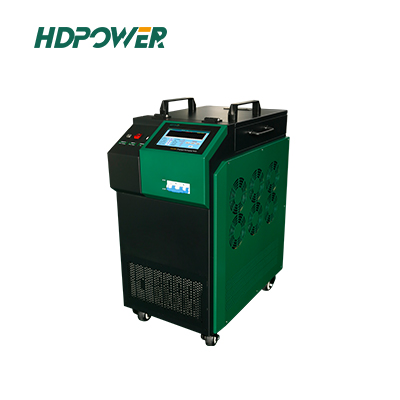
Our battery charger discharger integrates charging, discharging, activation, and capacity testing into one system, reducing the need for multiple devices. This improves workflow efficiency and ensures consistent battery diagnostics across different applications.

High-Precision Battery Capacity Testing

Equipped with advanced control algorithms and high-accuracy sensors, the system delivers reliable battery capacity testing and performance analysis, helping users quickly identify weak or degraded batteries.

Intelligent Data Analysis & Reporting

The built-in software automatically records testing data and generates detailed reports, including voltage curves, current curves, and capacity results, enabling data-driven battery maintenance decisions

Multi-Mode Operation for Different Scenarios

Supports multiple working modes such as constant current discharge, constant power discharge, constant voltage charging, and cyclic activation, making it suitable for various battery testing requirements

FAQs

What is a battery charger discharger?
A battery charger discharger is a testing device that performs charging, discharging, and capacity analysis to evaluate battery performance and health.
It helps identify battery degradation, ensures system reliability, and prevents unexpected failures in critical applications like UPS and telecom systems.
Yes. By performing activation and controlled charge-discharge cycles, it can restore battery performance and reduce capacity loss.
Common industries include telecom, power utilities, rail transit, data centers, and electric vehicles.
Consider voltage range, current capacity, battery type compatibility, and whether features like wireless monitoring and data analysis software are required.

contact us